I read two novels both written in the voice of a
young woman, and these very different voices are wonderfully evoked by the
authors. In Anne Enright's The Forgotten Waltz a 33 year old Irish woman careens through marriage and an
affair with a married man, in which there is precious little romance. Enright's
prose perfectly captures the voice and world-view of this woman: the
carelessness, her disregard of consequences. There's not much more of a tale
here, but the voice is the heart of the matter. Miriam Toews' Irma
Voth is a more substantial story of a late-teen woman
who leaves her Mennonite family in rural Mexico, with two much younger sisters,
to escape the repression of their father. There is an fertile conceit of a
filmmaker who employs Irma as a translator on his film about a Mennonite
couple. Events revealed towards the end of the novel add a layer of deep
reflection for her. Irma is quite uneducated in books and the world. Toews
perfectly captures this very different voice: the uncertainty, the
other-worldiness, the complete unawareness of modern life. First person novels
can be a risky business, but Toews and Enright have both nailed it.
 When people recommend books or films, they often add a caveat. "It's hard work, dark, not really fun, but read it because it's good, like taking cod liver oil." With The Map and the Territory, there's no caveat: it's a substantial book and a great read. This is the first novel by Michel Houellebecq that I have read. I understand that he was considered a real l'enfant terrible, but I'm not familiar with this. His early books apparently were marinated in explicit sex, but there is not a single kiss in this one. So, I read it with no expectations, but either way I strongly recommend it.
The story is about a painter, his life and artistic journey. But, the book is about Art, Architecture, Friendship, Fathers-and-sons, Aging, and is chock full of wonderful insights on all of these topics. If I have one small qualm it is about the use of a conceit that has been frequently seen in novels over the past decade: the painter meets a famous author...Michel
Houellebecq . However, a plot twist at the end of the novel adds an intriguing aspect to this. The Map and the Territory has great writing, is well translated, and explores cultural & human issues of importance. And...it's fun to read.

 I'm a fan of dark, indie films about playing the piano. My top pick has recently changed. To qualify: no big-name actors, low budget, no big-name producer. That means The Piano and The Piano Teacher are eliminated right out of the box. Holly Hunter and Isabelle Huppert are way too big! My top ranked indie for some time had been The Beat That My Heart Skipped, directed by Jacques Audiard, in 2005. Romain Duris stars as an aspiring pianist who is slowly tugged into a questionable line of business and the world of his small-time-crook father. It's a tough and dark place that he inhabits. Let's get even darker.... Four Minutes, directed Chris Kraus in 2006, has knocked Heart Skipped out of the top spot! We have a double-helix of trouble here. Monica Bleibtru does a fantastic job playing an elderly piano teacher who works in a prison. She is incredibly strict, passionate about music, and tortured by memories of her youth in Nazi Germany. Her rebellious and violent student is in the slammer for murder and was a child prodigy. She is well played by Hannah Herzsprung. Kraus does a fantastic job with the development of their relationship, and their mutual relationship with music. There is some fun, kick-ass piano playing in the film.
TRIVIA: Yes, Monica is mother of Moritz Bleibtru, a German indie character actor. They both appeared in Tom Tykwer's early hit, Run Lola Run.
Every year on New Year's Day, and one week later on my birthday, I walk a labyrinth. I do this for two reasons: to consciously set aside habits and emotions that I'd like to leave behind, and to set intentions for the new year. Today, Debbie & I walked the labyrinth at Milner Plaza next to the International Folk Art Museum in Santa Fe.

Labyrinths have a long history, going back to ancient Greece and around the world. Formal walking meditation in a labyrinth harks back to medieval Europe. It was used as a symbolic pilgrimage. Today the labyrinth has become a metaphor of personal growth and change. People often use them at inflection points in their lives, to seek guidance and mark change. This is facilitated by the structure of the labyrinth, which is a wonderful symbol for life. First of all, there are no wrong turns. Once you take a step on this path, you will reach the center, if you keep going. However, at times, it seems that you are not making progress... At first you might be moving forward and then you will be going the opposite direction. Next, you will be walking close to the center and then find yourself back at the outer rim. We go forward and backwards, left and right, but no step is wasted, and each step is necessary to reach the goal. How like the path we all have tread in life. You can use the labyrinth to seek guidance, to do a walking meditation or to just enjoy the day.
 My favorite work for piano and orchestra is Prokofiev's Concerto #3. Sergei was, of course, a monster pianist, and this piece is lively, clever, fiendishly difficult, and often just plain fun. If you are looking for Russian angst, it is thankfully absent! The Santa Fe Concert Association Orchestra performed this on New Year's Eve and 21 year old pianist Claire Huangci absolutely nailed it. She displayed extraordinary facility & technique, combined with mature artistry. She flew gracefully through lightning fast passages, and powered out in the big ones. She made my fave come alive. Happy New Year, Claire, we will keep an eye and ear out for you!
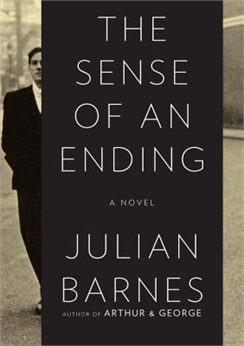
 Reading novels is a passion of mine. I read 43 novels in 2011. Rarely have I encountered a sequence of readings that quite accidentally link neatly together, like has just happened. The bookends I talked about in the previous posting is now a triangle. The bookends were Luminous Airplanes, a coming of age story, and I Married You for Happiness, a reflection on years of marriage. I just finished the Man Booker winner, A Sense of an Ending by Julian Barnes, which created the triangle. The first half of this book looks back on a young man's years in college & a close circle of friends. In the second half of the book, a diary left in a will triggers an interaction between the protagonist and a college girlfriend, from a vantage point 45 years later. In addition to a very good story, it explores how unreliable memory can be. The book has delightful characters & wonderful writing. In Barnes' novel we have another coming of age story, this time in arrears, and another reflection on a life, this time with an examination of memory in life. The triangle is complete.
 I just finished reading two books that quite accidentally are perfect bookends for each other. Paul LaFarge's Luminous Airplanes is a wistful coming-of-age story. I usually avoid coming-of-age stories, I find that my own was quite enough, but this one slipped through. A young man goes to his recently deceased grandfather's home to clean it out. He begins a search for his dead father who he never met. He was raised by his mother and aunt, a fun pair of eccentric characters. He encounters a childhood friend, and begins a repeat of his father's failure. He had been a graduate student of history, always a good setup for characters looking back. History, memory, loss and finding you self.
In Lily Tuck's I Married You For Happiness a woman's husband dies unexpectedly after many years of marriage. She takes us through a stream-of-consciousness of memories as she sits through the night. Her husband was a mathematician, but not a recluse: he loved good food & wine, and sailing. There are fun math anecdotes, for example the story of "amiable numbers" and lots of travel references, especially in France. The two books make a good pairing, which I have not encountered in this way before.


 I read two novels both written in the voice of a
young woman, and these very different voices are wonderfully evoked by the
authors. In Anne Enright's The Forgotten Waltz a 33 year old Irish woman careens through marriage and an
affair with a married man, in which there is precious little romance. Enright's
prose perfectly captures the voice and world-view of this woman: the
carelessness, her disregard of consequences. There's not much more of a tale
here, but the voice is the heart of the matter. Miriam Toews' Irma
Voth is a more substantial story of a late-teen woman
who leaves her Mennonite family in rural Mexico, with two much younger sisters,
to escape the repression of their father. There is an fertile conceit of a
filmmaker who employs Irma as a translator on his film about a Mennonite
couple. Events revealed towards the end of the novel add a layer of deep
reflection for her. Irma is quite uneducated in books and the world. Toews
perfectly captures this very different voice: the uncertainty, the
other-worldiness, the complete unawareness of modern life. First person novels
can be a risky business, but Toews and Enright have both nailed it.